
Protests against the Waqf Act turned violent in parts of West Bengal on Friday, with demonstrators setting ablaze vehicles, disrupting traffic and rail movement, and injuring several policemen. The unrest erupted in Suti, Murshidabad district, where protesters defied prohibitory orders, hurled stones at security personnel, and torched police vans and public buses during processions. Police responded with lathi charges and tear gas, while some officers were forced to seek refuge in a nearby mosque. Similar protests were held in Malda and Kolkata, prompting Governor C V Ananda Bose to direct the state government to take swift action against those responsible. The governor also contacted Union Home Minister Amit Shah and held discussions with Chief Minister Mamata Banerjee. The Waqf (Amendment) Bill, which was recently passed by both houses of Parliament, aims to improve the management of Waqf properties, safeguarding heritage sites and promoting social welfare.

The Karnataka government has warned that disciplinary action will be taken against those officials who change the land mutation records and serve eviction notices to farmers under the Waqf Act.
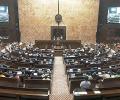
The Waqf (Amendment) Bill, 2025 was passed in the Lok Sabha early Thursday, with 288 members supporting it and 232 against it.

The parliamentary committee scrutinising the Waqf bill is set to propose that existing 'Waqf by user' properties will remain so if not in dispute or are government facilities but they must be registered before the new law takes effect, providing little relief to Waqf bodies in their unverified title claims.

The YSR government had allotted Waqf land worth Rs 32,000 crore to Lanco group and other companies ignoring the protest by the Waqf Board and other Muslim organisations. Mohammed Siddique reports
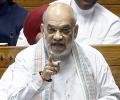
The Lok Sabha passed the Waqf (Amendment) Bill, 2025, with the ruling NDA defending it as beneficial for minorities while the opposition called it "anti-Muslim". All amendments moved by the opposition were rejected and the bill was passed with 288 votes in favor and 232 against. Union Minorities Affairs Minister Kiren Rijiju asserted that India is the safest place in the world for minorities, refuting claims of their insecurity.

Protesters in West Bengal's Murshidabad district set fire to police vehicles and hurled stones during a demonstration against the Waqf (Amendment) Act. The incident occurred on Tuesday afternoon in the Jangipur area, where a large crowd had gathered demanding the withdrawal of the legislation. Police responded with lathi charges and tear gas to control the situation. Several people were detained and police personnel were injured in the stone-pelting. The West Bengal Police has said the situation is under control and strict action will be taken against those who resorted to violence.

The bill to amend the law governing Waqf boards proposes far-reaching changes in the Wakf Act, 1995, including ensuring the representation of Muslim women and non-Muslims in such bodies.

'Such a remark does not behove the Prime Minister. Also, you have brought the country's youth to this point. There are no jobs. The only option is to fix punctures or sell fritters. Muslims don't just make punctures. I can list what Muslims have made'

The development comes a day after a government resolution (GR) was issued, in which the state administration ordered disbursal of Rs 10 crore funds for strengthening the state Waqf Board.
'They want to snatch the land and give it to their friends'
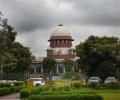
The Supreme Court of India will likely hear a batch of petitions challenging the constitutional validity of the Waqf (Amendment) Act, 2025 on April 15. The Act, which came into force on April 8, has been met with widespread criticism from various stakeholders, including politicians, the All India Muslim Personal Law Board (AIMPLB), and Jamiat Ulama-i-Hind. They argue that the law is discriminatory and violates the fundamental rights guaranteed under Articles 25 and 26 of the Constitution. The petitions allege that the amendments give the government more control over the administration of Waqf, effectively sidelining the Muslim minority from managing their own religious endowments.

A three-judge Supreme Court bench will hear petitions challenging the constitutional validity of the Waqf (Amendment) Act, 2025, on April 16. The petitions, including those by politicians and the All India Muslim Personal Law Board (AIMPLB) and Jamiat Ulama-i-Hind, were filed in the top court challenging the validity of the newly-enacted law. The Centre has filed a caveat in the apex court, seeking a hearing before any order is passed.

The specter of how the Munambam issue was exploited during the November by-elections is proof of the price Kerala is paying for its emergent politics. Controversies become the stuff of slow-burn and brinkmanship. The former promises mileage; the latter searches for an advantage, notes Shyam G Menon.

The Delhi high court on Thursday sought the stand of the central government and Central Waqf Council on a PIL seeking to declare that the Waqf Act is in violation of the Constitution and that private properties of citizens can only be governed by a Uniform Civil Code.
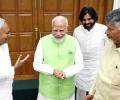
It also cautioned that if the legislation is passed, the "two crutches" on which the Bharatiya Janata Party-led government is running at the Centre would not be able to escape responsibility.

BJP president JP Nadda said on Sunday that the party does not seek to control the Waqf Board but wants to ensure that those managing it operate within the bounds of law and adhere to established rules. He said the properties and funds of the Waqf Board should be dedicated to promoting education, providing healthcare and employment opportunities for the Muslim community. Nadda also highlighted the BJP's growth and achievements, emphasizing its commitment to national unity and cultural heritage.

Kerala Chief Minister Pinarayi Vijayan has accused the RSS of "majority communalism" over an article published in an RSS mouthpiece regarding the Catholic Church's property holdings in India. The article, which has since been removed from the website, called for the government to acquire the church's land, claiming it was illegally leased during the British era. Vijayan said the article reveals the "true mindset" of the RSS and its alleged plan to "target minority groups one by one and destroy them step by step." The Leader of the Opposition in the Kerala Assembly, V D Satheesan, echoed Vijayan's concerns, stating that the article shows the RSS's intent to target the Church's property. He also claimed that the article's publication coincides with the passing of the Waqf Bill in Parliament, suggesting a pattern of targeting religious communities. Meanwhile, the BJP state president, Rajeev Chandrasekhar, denied the article's accuracy and stated that the article was removed after it was found to be untrue. He also emphasized that owning land is not a crime, and countered allegations that the Congress and Waqf have illegally acquired land in Karnataka. Archbishop Joseph Pamplany of Thalassery, however, expressed confidence that the Church is not afraid of any "Church Bill", as its properties have been earned through hard work. He said the Church will take legal action if necessary.

All opposition members of the parliamentary panel on the Waqf Amendment Bill were suspended for a day on Friday amid continuous protests and accusations against Chairman Jagdambika Pal of steam-rolling through the proceedings.
Samajwadi Party President Mulayam Singh Yadav on Saturday pointedly accused the Congress-led United Progressive Alliance government at the centre of attempting to grab Waqf properties across the country through an executive order.

Prime Minister Narendra Modi criticized the Congress party following the NDA's victory in the Bihar assembly elections, accusing them of divisive politics and highlighting the rejection of casteism and communalism by the people of Bihar.

'Muslims need to work according to strategy and not fall into the trap of Opposition parties.'

The high court also instructed both the Mamata government and the Centre to submit detailed reports on the situation. The matter is scheduled for further hearing on April 17.

'The irony of this country is that the party in Opposition and the party in power both depend on Muslims.'

The meeting of the Joint Committee on Waqf (Amendment) Bill took an ugly turn as the Trinamool Congress MP smashed a glass water bottle and threw it towards panel chairman Jagdambika Pal of the Bharatiya Janata Party during a heated exchange of words with BJP's Abhijit Gangopadhyay, a former Calcutta high court judge.

Hours after the Waqf (Amendment) Bill was passed in Parliament, 50 individuals embroiled in land disputes in Kerala's Munambam joined the BJP, hoping for a resolution to their claims. The residents, who have been protesting for 174 days, allege that the Waqf Board is claiming ownership of their properties. BJP leader Rajeev Chandrasekhar assured them of the party's support and a meeting with Prime Minister Narendra Modi to express gratitude. The BJP capitalized on the Catholic Church's support for the legislation, accusing the Congress and the Left of appeasement politics. The opposition, however, questioned the impact of the bill on the Munambam issue.

The Bill to amend the Wakf Act, 1995, will make it mandatory for Waqf boards to register their properties with district collectors to ensure their actual valuation.

Students at Udai Pratap College in Varanasi, India, protested demanding the removal of a mosque located on the campus. The protest came after tensions arose when a section of students recited Hanuman Chalisa near the mosque while prayers were being offered. The college administration has denied claims by the Uttar Pradesh Sunni Central Waqf Board that the mosque and surrounding land are Waqf property, stating that the mosque was built illegally. The college administration has also accused the mosque of stealing electricity.

Banerjee said she will protect the minority people and their property.
the Uttar Pradesh Sunni Central Waqf Board on Tuesday filed a caveat in the Supreme Court to prevent the ASI from taking an ex parte order on the issue.

Union Home Minister Amit Shah criticizes Kerala's ruling Left government over the Sabarimala gold loss case, demanding a neutral investigation and accusing the government of protecting the real culprits. He also signals the start of the BJP's campaign for the upcoming Assembly elections.

Yogi said Waqf boards have become a den of selfish interests as well as loot khasot (property grabbing), and have done little for the welfare of Muslims.

The Lok Sabha, India's lower house of Parliament, will debate the contentious Waqf (Amendment) Bill on Wednesday. The bill has been met with strong opposition from several parties who claim it is unconstitutional. The government, however, insists the bill aims to improve the management of Waqf properties in India by bringing transparency and efficiency.
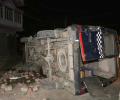
Supporters of the Indian Secular Front (ISF) clashed with police in West Bengal on Monday during protests against the Waqf (Amendment) Act, leading to several injuries and the torching of multiple police vehicles. The clash occurred after police stopped ISF supporters from attending an anti-Waqf Act rally in Kolkata. The protests escalated when the crowd attempted to break through police barricades. The situation was brought under control after a large police force was deployed. ISF leader Naushad Siddique condemned the Waqf Act and accused the BJP of trying to incite communal tension. Meanwhile, the ruling Trinamool Congress dismissed the ISF as a "party of no consequence." Communal violence related to the Waqf Act has also occurred in other parts of West Bengal.

A meeting of the joint committee of Parliament on the Waqf (Amendment) Bill on Friday witnessed fireworks with members vociferously opposing certain provisions of the draft legislation, leading to a brief walkout by opposition members.

A chance meeting between Jammu and Kashmir Chief Minister Omar Abdullah and Union minister Kiren Rijiju at the Tulip Garden in Srinagar has sparked a political storm, with opposition parties accusing the National Conference of laying out a red carpet for the BJP leader in the aftermath of the Waqf Amendment Act. While NC sources termed the interaction as a purely coincidental encounter, opposition parties like the PDP and Peoples' Conference condemned the meeting, accusing the NC of surrendering to the BJP. The Waqf (Amendment) Bill, passed by Parliament last week, aims to streamline the management of Waqf properties with provisions to safeguard heritage sites and promote social welfare.
Describing the Waqf Board decision as "not in the interest of Taj Mahal," a representative of the Archaeological Survey of India, who attended the hearing, said it would challenge it in the court of law.

"We have no problem if the students here offer namaaz or worship in the mosque or temple on the college premises. But we do not accept that outsiders are gathering here in the name of offering namaz on the college premises," he said.

Amid escalating tensions at the Uday Pratap College in Varanasi over a mosque located on its premises, police on Thursday restricted outsiders' entry to the campus, allowing only students with valid identity cards.

The demand comes nearly a month after violence erupted in Nagpur during a rally which demanded the removal of Aurangzeb's tomb.
